The Kinetic Chain: Why Power Originates From the Floor
One of the most persistent misconceptions in combat sports is that punching power is generated purely from the shoulders and arms. In physiological reality, every devastating hook, snapping straight, and concussive uppercut begins at the ground. Through the principle of the kinetic chain, force is transferred from the foot's contact with the ring canvas, driven upward through the ankles, hips, and core, and finally unleashed through the knuckles.
If your footwear lacks grip, flexes excessively, or introduces unnecessary spongy elevation beneath your heel, that kinetic energy leaks before it ever reaches your torso. Dedicated boxing footwear is engineered precisely to eliminate energy loss: providing paper-thin rubber outsoles that maximize sensory proprioception and anchor your stance during rotational power generation.
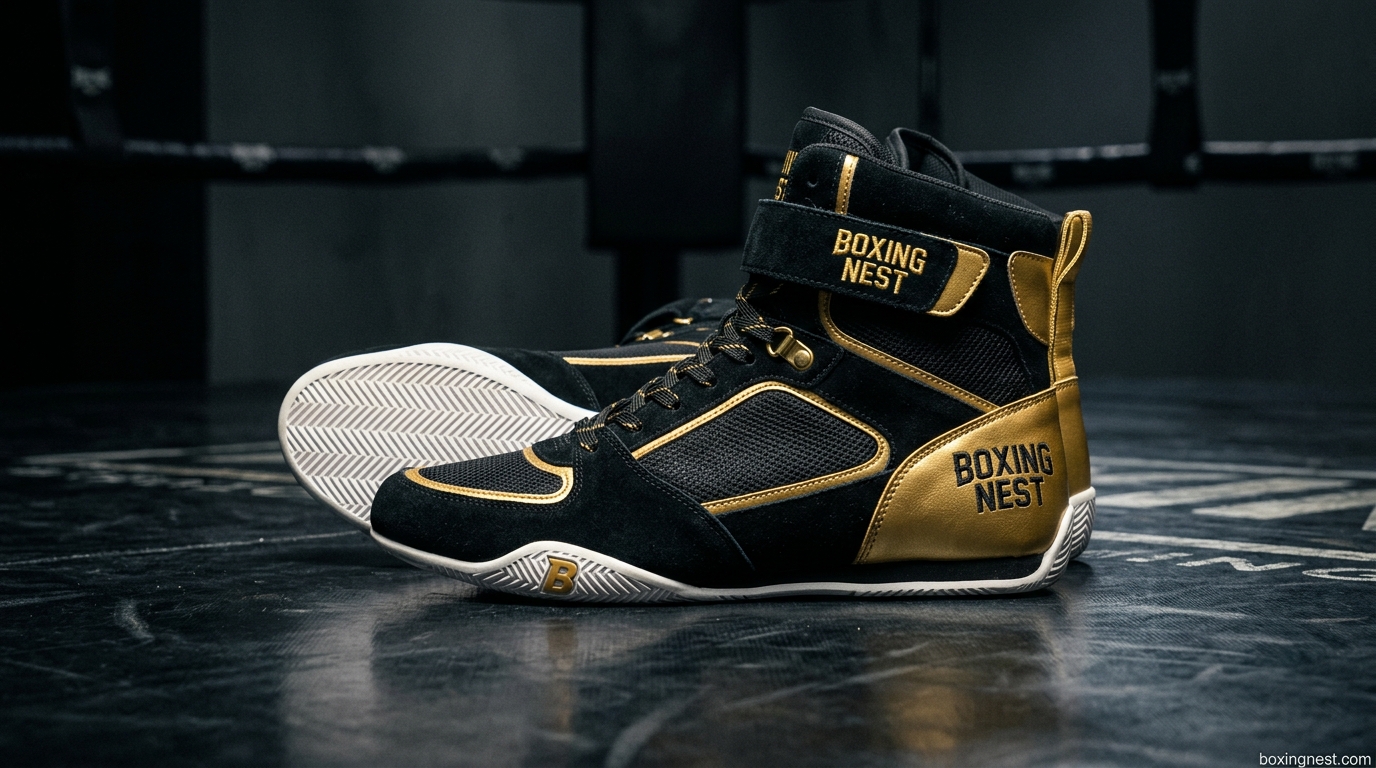
Beyond offensive mechanics, boxing footwear dictates your defensive survival. When slipping an incoming barrage or executing an angle-change pivot to counter an aggressive opponent, a fraction of a second determines whether you evade or absorb trauma. Having specialized ring boots that wrap your ankle like a second skin provides the confidence to move aggressively without fearing rollover sprains.
⚡ The Ring Contact Axiom
"You can only hit as hard as your base is solid." A fighter who slides on canvas is a fighter whose punches carry half their potential power. Zero-drop thin rubber soles keep your center of gravity glued to the floor for maximum torque.
Boxing Shoes vs. Standard Running Sneakers: The Hidden Dangers
Novice fighters frequently walk into boxing gyms wearing running shoes or basketball sneakers. While cushioned athletic shoes are outstanding for outdoor roadwork and jogging, they represent a significant safety hazard inside a boxing ring.
1. Thick Cushioning Causes Ankle Inversion
Running shoes feature elevated foam heels (often a 10mm to 14mm heel-to-toe drop) engineered for forward shock absorption. In boxing, footwork is multidirectional: lateral shuffles, sudden checks, and sharp 90-degree pivots. High foam soles act as a lever; if you plant your foot at an angle during a sudden pivot, the high cushion collapses, resulting in severe lateral ankle ligament tears.
2. Tread Patterns vs. Canvas Texture
Jogging shoes utilize aggressive lug patterns designed for asphalt and dirt. On smooth canvas or rubber gym matting, deep treads create irregular "stick points" that grab the canvas abruptly while your body is spinning, twisting the knee joint dangerously. Boxing shoes feature micro-ribbed or herringbone soles that slide smoothly when lateral movement is initiated but bite instantly when weight is driven downward into a punch.
Sole Architecture & Pivot Dynamics
The underside of a boxing shoe is a marvel of combat engineering. Unlike any other athletic shoe, every millimeter of the outsole is built around the biomechanics of rotation.
Anatomical Pivot Points
Underneath the first metatarsal head (the ball of the big toe), elite boxing shoes integrate a circular or radial pivot groove. This feature reduces rotational friction, allowing you to spin smoothly on the lead foot when executing a check hook or shifting outside your opponent's lead shoulder without joint resistance.
Zero-Drop Ground Feedback
A zero-drop sole means your heel and forefoot rest at the exact same elevation, mirroring bare-foot ground alignment. This low profile allows sensory receptors in your foot to feel the canvas texture instantly, improving balance recovery and explosive push-off acceleration.
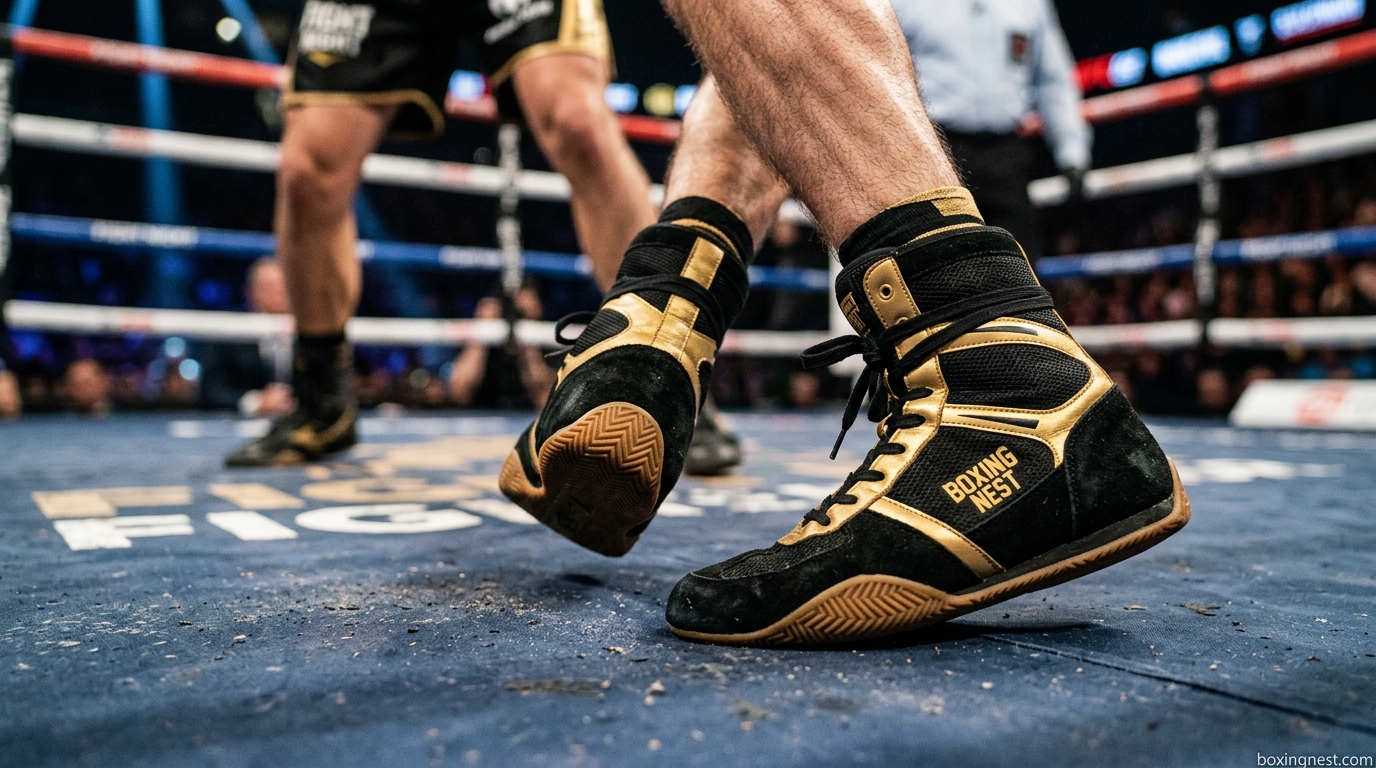
High-Top vs. Mid-Top vs. Low-Top: Which Cut Suits Your Style?
Boxing boots are manufactured in three distinct collar heights, each tailored to specific tactical fighting styles:
| Collar Style | Shaft Height | Ideal Fighting Profile | Core Advantage |
|---|---|---|---|
| Low-Top | At Ankle Line | In-fighters, explosive speedsters | Unrestricted ankle flexion & featherlight speed |
| Mid-Top | 2–3" Above Ankle | All-around boxers, hybrid counter-punchers | Balanced stability with rapid direction changes |
| High-Top | 6–9" Up Calves | Tall out-boxers, fighters with history of sprains | Maximum tendon lockdown & shin-splint relief |
If you have previously experienced ankle twists or weak Achilles tendons, high-top boots laced tightly provide the rigid structural support of a medical brace without sacrificing foot flexion. Conversely, aggressive inside pressure fighters often prefer mid-top or low-top cuts to allow deep ankle knee-bends during infighting leverage.
Materials, Breathability & Weight Optimization
Modern championship footwear has evolved far beyond the heavy, unventilated leather boots of historical eras. Today's ring footwear combines aerospace materials with supple leather overlays:
- Open Hydrophobic Mesh: Highly breathable side panels that dump heat and moisture continuously throughout 10-round sparring sessions.
- Microfiber Suede Reinforcements: Lightweight synthetic suede placed across high-wear stress points: the toe box, lateral forefoot wall, and heel counter.
- Gum Rubber Compounds: Natural gum rubber outsoles that retain tacky canvas traction even when damp canvas conditions emerge late in intense sparring sessions.
Precision Sizing & Fitting Protocols
Fit is paramount. A boxing shoe that is too loose will allow your foot to slide forward inside the toe box during hard braking, bruising your toenails. A shoe that is overly narrow will pinch your metatarsals, cutting off blood circulation and inducing severe foot cramps after round four.
| Foot Measurement | US Men's Size | EU Size | Fit Recommendation |
|---|---|---|---|
| 24.5 cm – 25.0 cm | 7.0 – 7.5 | 40 – 40.5 | Snug glove-like contour |
| 25.5 cm – 26.0 cm | 8.0 – 8.5 | 41 – 42 | Standard athletic sock pairing |
| 26.5 cm – 27.0 cm | 9.0 – 9.5 | 42.5 – 43 | Standard men's medium width |
| 27.5 cm – 28.0 cm | 10.0 – 10.5 | 44 – 44.5 | True-to-size performance lock |
| 28.5 cm – 29.5 cm | 11.0 – 12.0 | 45 – 46 | Heavyweight spacious toe box |
Always measure your feet at the end of the day or immediately after training when your feet are slightly swollen to their maximum volume. Ensure you wear the exact pair of athletic boxing socks you intend to use in the ring when sizing.
Biomechanical Pivot Execution in Ring Footwear
To get the most out of your ring boots, rehearse these foundational footwork drills:
- Stay on the Balls of the Feet: Never let your heels rest flat on the canvas while inside striking range. Keep 70% of your bodyweight on the balls of your feet.
- Drive the Big Toe Into the Pivot: When throwing the rear cross, dig the ball of your back foot into the canvas and spin your heel outward like snuffing out a cigarette.
- Short, Razor-Sharp Steps: Avoid long leaping bounds. Keep your base between 16 to 22 inches wide at all times so your feet are always positioned to punch or pivot defensively.
Step onto the canvas with championship agility and supreme ankle lockdown.
🥊 View Precision Sizing GuideMaintenance & Canvas Longevity
Boxing shoes are engineered specifically for ring canvas, smooth wood, and clean rubber training mats. They must never be worn outdoors. Walking on asphalt, gravel, or sidewalk concrete will grind down the delicate rubber tread in days and transfer abrasive dirt onto your gym's boxing ring.
- Gym-Bag Only Rule: Put on your boxing shoes only when your feet touch the ring or training mats; change into street sneakers before leaving the gym.
- Ventilate After Sparring: Loosen laces completely down to the toe box and pull the tongue forward to allow interior moisture to evaporate naturally.
- Sole Decontamination: Wipe down outsoles weekly with a slightly damp microfiber towel to remove accumulated dust and restore sticky canvas grip.